
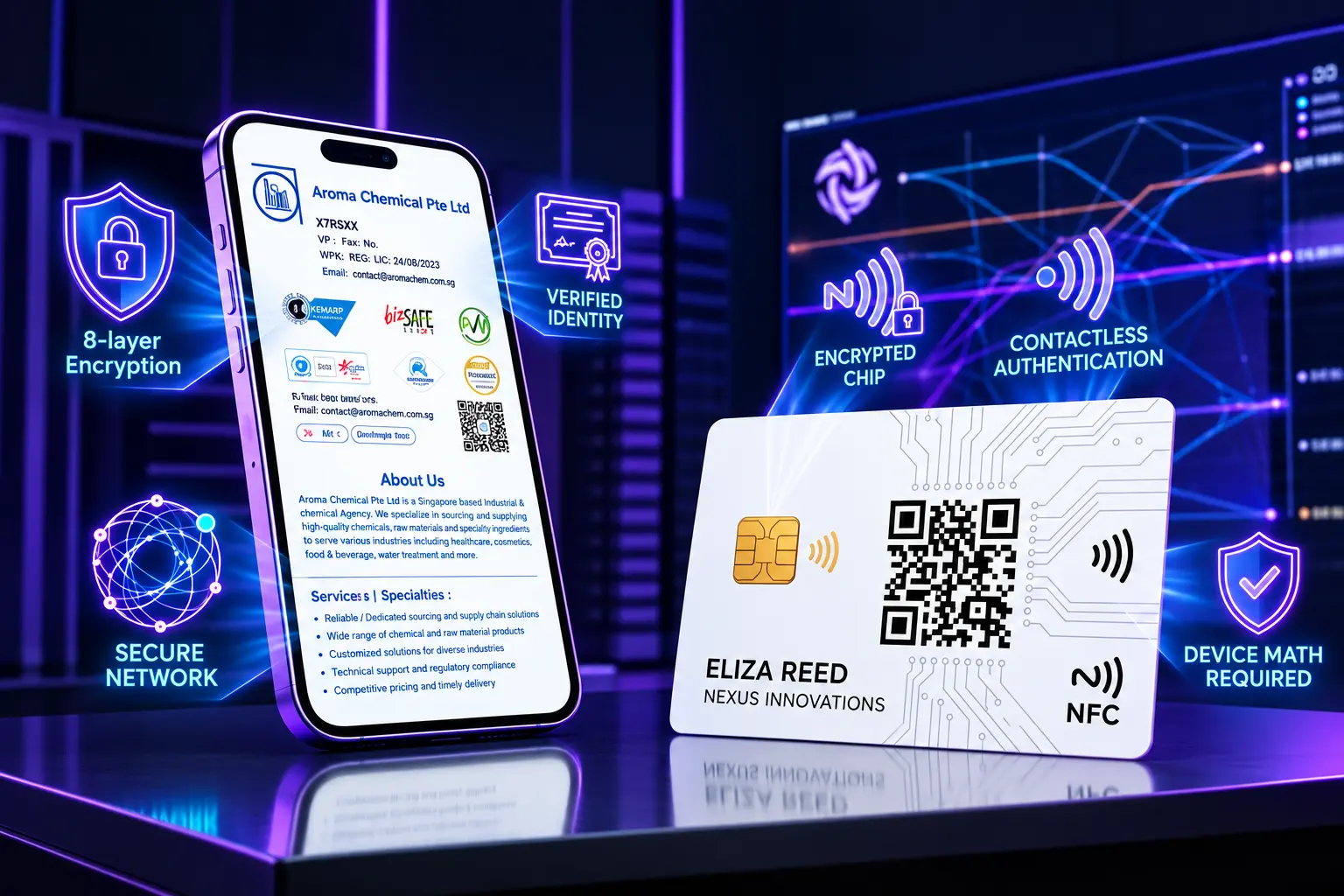
In today’s digital world, professionals and businesses in Singapore are looking for convenient ways to share contact details while protecting their information. Digital name cards and NFC business cards offer different ways to connect, but which option provides better security?
The answer depends on how the card is configured, how information is shared, and how securely the online profile is managed. In this guide, we compare digital name card security and NFC card security, explain their differences, and share practical tips for choosing a secure solution.
1 What Is a Digital Name Card?
A digital name card is an online professional profile containing information such as your name, job title, company, phone number, email address, website and social media links.
You can share your digital name card through a QR code, a direct link, email or messaging platforms. Recipients can open the profile using a compatible web browser without installing specialized hardware or apps.
2 How Does Digital Name Card Security Work?
Digital name card security depends on the platform hosting the profile and the information you choose to publish.
A well-managed platform may use HTTPS encryption, account authentication and appropriate access controls to help protect users. However, information displayed on a public profile may be accessible to anyone who has the link.
Before choosing a provider, review its privacy policy, account security options and profile visibility settings. Avoid publishing confidential information on a public profile.
3 What Is an NFC Business Card?
An NFC business card is a physical card containing a Near Field Communication (NFC) chip. When a compatible smartphone is brought close to the card, it can open a stored link, often leading to a digital name card profile.
Many NFC business cards store a URL rather than the complete professional profile. In these cases, the chip provides a convenient way to access the online profile, while the profile itself is managed separately on cloud servers.
4 How Does NFC Card Security Work?
A typical NFC business card that stores a web link does not automatically access the recipient’s contacts, photos or passwords. It provides a link that the recipient’s phone can open.
However, an NFC tag may direct a user to an unsafe or misleading website if its link is malicious or has been altered. Users should check the destination before opening unfamiliar links or entering personal information.
The security of the linked profile is also important. If the profile is public, anyone who can access it may be able to view the information displayed there.
5 Digital Name Card vs NFC Card: Security Comparison
| Security Factor | Digital Name Card | NFC Business Card |
|---|---|---|
| Main function | Displays a professional profile online | Provides a physical way to open a link or profile |
| Information exposure | Depends on profile visibility and privacy settings | Depends on the stored link and linked profile |
| Link safety | Users should verify unfamiliar links | Users should verify the destination before opening it |
| Account protection | Depends on provider security and account settings | Depends on the linked profile and provider |
| Physical loss | No physical card is required | A lost card may expose its public profile link |
| Unauthorised changes | Possible if an account is compromised | Possible if the profile account or writable tag is compromised |
| Remote sharing | Through a link or QR code | Through a link or QR code, if available |
| Overall security | Depends on the platform and sharing settings | Depends on the tag, destination link and platform |
Important Distinction
Digital name cards and NFC cards are not necessarily competing technologies. An NFC business card can link directly to a digital name card, meaning both can use the same online profile and security controls.
6 Which Is More Secure for Businesses in Singapore?
There is no universal winner. The right choice depends on your business requirements, the provider you use and how you manage professional information.
Digital Name Cards for Online Networking
A digital name card is useful for sharing contact details through email, WhatsApp, online meetings and social media. Its security depends on the hosting platform, account protection and profile visibility settings. Businesses should choose a provider that explains how personal information is stored, managed and protected.
NFC Business Cards for Face-to-Face Networking
NFC business cards are convenient for conferences, exhibitions and client meetings. They allow people to open a digital profile through a tap on a compatible smartphone. Before using an NFC card, confirm that it links to the correct website. If the tag supports writing or reprogramming, check whether suitable protection against unauthorised changes is available.
Can Digital Name Cards and NFC Cards Be Used Together?
Yes. An NFC business card can link to your digital name card, combining physical contact sharing with an online professional profile. This setup supports both in-person and remote networking. However, using both technologies does not automatically make the profile more secure. The security of the account, website and shared information remains important.
7 Best Practices for Digital Name Card and NFC Card Security
Whether you choose a digital name card, an NFC business card or both, follow these practices to improve security:
8 Frequently Asked Questions (FAQs)
1. Is a digital name card safer than an NFC card?
Not necessarily. Security depends on the platform, account protection, profile visibility and card configuration. An NFC card linked to a secure digital profile may use the same security protections as a digital-only card.
2. Can an NFC business card steal information from my phone?
A typical NFC business card that stores a URL does not automatically extract contacts, photos or passwords. However, you should be cautious when opening unfamiliar links and never enter sensitive information on an untrusted website.
3. Can someone copy my NFC business card?
A person may be able to copy a public link stored on a typical NFC tag. Copying the link does not automatically provide access to your account. Protect your account and avoid publishing confidential information.
4. What information should I avoid sharing on a digital name card?
Avoid publishing passwords, financial credentials, confidential business documents and sensitive personal information. Share only the contact details that are appropriate for professional networking.
5. Does an NFC business card need an internet connection?
A phone can read a typical NFC tag at close range without an internet connection. However, an internet connection is generally required to load the online profile linked to the card.
6. How can I choose a secure digital business card provider in Singapore?
Review the provider’s privacy policy, account security options, data handling practices, profile controls and support availability. Check which information is public and how you can update or remove it.
7. Can I use a digital name card and an NFC card together?
Yes. An NFC card can link to your digital name card, combining physical contact sharing with an online profile. Security depends on the card configuration and the platform hosting the profile.
9 Conclusion: Make Digital Networking Secure
Digital name cards and NFC business cards both offer convenient ways to share professional information. Neither option is automatically more secure in every situation.
A digital name card provides flexible online sharing, while an NFC card offers a physical way to open a profile. The most important considerations are the trustworthiness of the provider, account security, destination link safety and the information you choose to share.
Looking for a convenient way to share your professional identity? Explore SG Namecard’s digital name card solutions and find an option that suits your networking needs.